
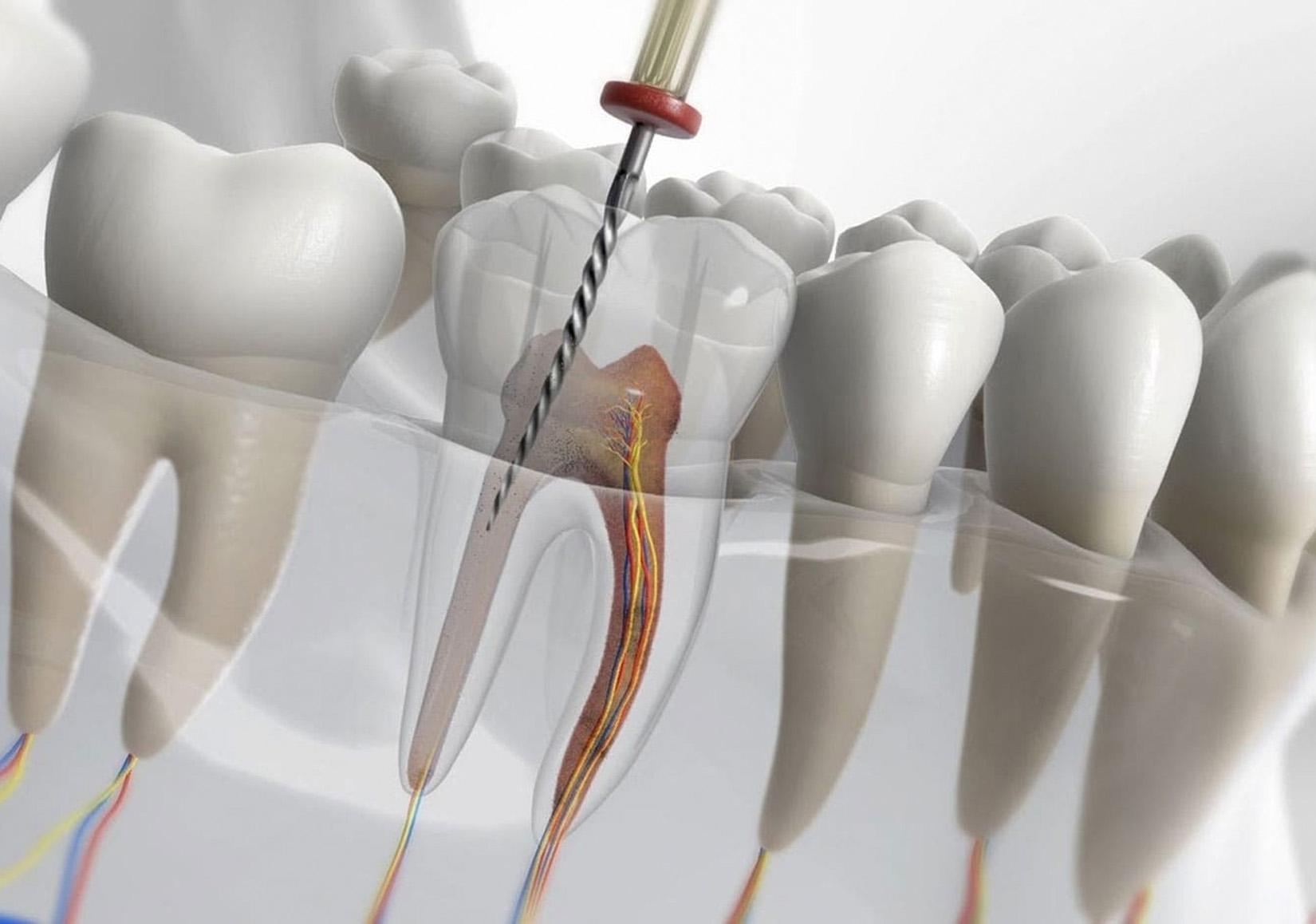
Root canal treatment (endodontics) is a procedure performed to treat infections or damage in the pulp, the inner part of the tooth that contains nerve tissue and blood vessels. When the pulp is damaged due to decay, trauma, or infection, it is removed, and the root canals are cleaned, shaped, and filled with a special material. Root canal treatment is an effective method to save a tooth without extraction and preserve its natural structure. The procedure restores the tooth’s function and ensures its healthy use for many years.
When Might It Be Necessary?
- Prolonged toothache and sensitivity
- Pulp damage due to deep decay
- Fracture or crack in the tooth caused by trauma
- Infection or abscess at the tooth root
- Situations where the tooth needs to be saved
Advantages of Treatment
- Saving the damaged tooth without extraction
- Maintaining chewing function
- Preserving the natural appearance of the tooth
- Preventing the spread of infection
- Long-term dental health after the procedure
Frequently asked questions
Local anesthesia is applied during the treatment, so no pain is felt. Mild sensitivity may occur afterward, but it is usually temporary.
The treatment may take one or two sessions depending on the condition of the tooth. More complex cases may require additional sessions.
With proper care and regular check-ups, a root canal-treated tooth can remain healthy for a lifetime.
It is recommended to avoid hard foods for the first few days after treatment. Additionally, regular brushing and flossing are important.
If the treatment is properly performed and hygiene is maintained, the risk of reinfection is very low. However, regular dental check-ups should not be neglected.
In most cases, yes. However, the structure of the tooth or the extent of the infection may pose challenges. Your dentist will determine the most suitable treatment to save the tooth.